Sapa's weather, best time for travelling
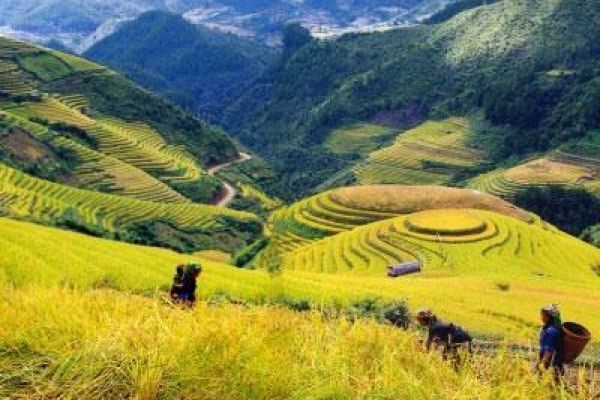
The climate of Sapa is highly seasonal, with a subtropical climate in the summer and a temperate climate during the winter. Average temperature for Sapa town is 15.4ºC, with a maximum of 29.4ºC and a minimum of 1ºC.
Sapa , is a frontier town and capital of Sa Pa District in the Lao Cai province in northwest Vietnam. It is one of the main market towns in the area, where several ethnic minority groups such as Hmong, Dao (Yao), Giay, Pho Lu, and Tay live.

For the most pleasant weather, the best times to visit Sapa is March and May or mid-September to early December. While trips can be enjoyed year-round, the winters in Sapa get cold, with some fog and drizzle, and the summers have the hottest weather and higher chances of rain, with the rainy season starting in May through September.

The Hoang Lien Mountains are home to a rich variety of plants, birds, mammals, amphibians, reptiles and insects, many only found in northwestern Vietnam. For this reason, the Hoang Lien Nature Reserve was made a National Park in 2006, and covers much of the mountain range to the immediate south of Sa Pa.
Forest type and quality change with increasing altitude. At 2000 meters the natural, undisturbed forest begins to be seen. Above 2500 meters dwarf conifers and rhododendrons predominate in the harsh “elfin forest”, so called because a lack of topsoil and nutrients means that fully mature trees grow to measure only a few meters in height. Higher still, only the hardiest of plant species are found. At over 3000 meters, Fan Si Pan’s summit can only support dwarf bamboo.
The climate of Hoang Lien National Park is unique to Vietnam. It is highly seasonal, with a subtropical climate in the summer and a temperate climate during the winter. Mean annual temperature for Sa Pa town is 15.4°C, with a maximum of 29.4°C and a minimum of 1°C. The warmest months are July and August, and the coldest months are December and January. Snow falls in some years on the highest peaks.

Climate varies considerably within the national park. The prevalent wind direction for most of the year is west to east, leading to cloud formation on the upper slopes of the Fansipan massif. These high-altitude areas are covered by cloud most days of the year and have very high humidity. Cloud also penetrates into the valleys but these areas are usually less humid than the mountain slopes. In the extreme east of the national park, around Ban Ho village, mean temperatures are considerably higher due to the lower altitude of these areas.
Back
Most read
- Dan Tam Three-string Lute
Category: Vietnamese music and instruments - View: 148
- Ca Na Beach – the “Sleeping Princess”
Category: Beaches and Islands - View: 143
- Impressive Cho Con (Con market) in Hai Hau - Nam Dinh
Category: Local markets - View: 141
- Yen Phu Incense Village
Category: Craft villages - View: 139
- Thien Cam Beach, a melodious charm
Category: Beaches and Islands - View: 136
- Enjoying picturesque beauty of Ba Dong Beach...
Category: Beaches and Islands - View: 136
- Full-moon Festival in Mekong Delta
Category: Festivals - View: 131
- Tra Co Beach
Category: Beaches and Islands - View: 127
- Mui Ne beach
Category: Beaches and Islands - View: 127
- Huong Canh Pottery Village
Category: Craft villages - View: 124
Popular Now in Religion
- Sapa's weather, best time for travelling
- Shiva in Saigon
- Hoa Hao Sect
- Shamanism in Vietnam
- Roman Catholicism in Vietnam
- Taoism – a part of the Tam Giao (Three Religions) of Vietnam
- Buddhism
- Christianity
Latest travel news
Explore Vietnam Destinations
-
Con Dao Island - Breathtaking attraction
-
Charming and romantic scenery in Ca Mau
in Ca Mau
-
Cao Son Market in Lao Cai
in Lao Cai
-
Bo Tan Lake - Breathtaking beauty spot
in Bac Giang
-
Visit from chair police in Hanoi
in Hanoi
-
Surprising at Giang Thom fairyland
in Quang Nam
-
Lac Hamlet – interesting destination for Home-stay tour
in Hoa Binh
-
Ban Don: green island between high mountain and thick forest
in Dak Lak
-
Thanh Hoa’s stream of odd fish
in Thanh Hoa
-
A Closer look at the largest Khmer temple in Vietnam
in Tra Vinh
-
Tailoring the perfect holiday in Hoi An
in Quang Nam
-
Huynh Thuy Le’s House in Dong Thap
in Dong Thap
-
Ha Tien town - Kien Giang
in Kien Giang
-
Ha Long Bay - A mythical journey
in Ha Long
-
Da Lat’s night market
in Lam Dong
-
Getting lost and loving it in Cau Giay
in Hanoi
-
The Peak of Hon Ba Mountain
in Khanh Hoa
-
Attractive Sang le forest
in Nghe An
-
A trip to Thac Ba lake
in Yen Bai
-
Thai Muong Lo hamlet with Tet atmosphere
in Yen Bai
-
2013 Street Carnival Festival in Hai Phong
-
The beautiful pictures of Ha Giang
-
Mong ethnic minority children create playground
-
Thắng cố - a mountain specialty
-
On the Rocky Plateau
-
It's worth paying a visit to Khau Vai love market
-
Saigon after 38 years of liberation
-
Purple flamboyant blossoming in early summer
-
Northern Mountainous Market Fair opens in Hanoi
-
Earn a living in Hanoi’s Old Quarter
-
Sorrowless flowers glow in Hanoi
-
Crazy about stone grinders
Vietnamese music and instruments
Chau Van Singing - A Unique Feature of Vietnamese Culture
In order to preserve and promote the art of Chau van singing,...
Pagodas, Temples, Towers, Churches, Tombs
Saigon's Notre Dame Cathedral- the worth visiting destination
Ho Chi Minh City is considered the economic and cultural...
Customs & Habits
Why Vietnamese Tet is for Home Cooking
Every year, I look forward to the week leading up to the Lunar...
Religion
Sapa's weather, best time for travelling
The climate of Sapa is highly seasonal, with a subtropical...
Craft villages
Thuan Hung paper cake craft village
When tourists in Vietnam tours visit the Mekong Delta city of...
Festivals
Enjoying the Lim Festival in Spring
In early January according to the lunar calendar, people flock...