



The owner skillfully lifts the cap of the tea cozy, takes out the tea pot, and then pours the hot tea into a small cup. The owner then hands the cup of steaming tea to the customer. Unlike northerners, who prefer hot steamy tea, people in the south would like to add ice cubes to their tea cups/glasses due to weather difference.

Tea drinking - an indispensable habit.
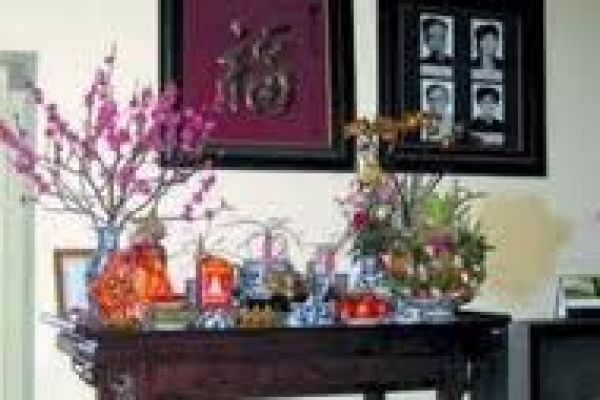
Vietnamese people have a nice habit of drinking tea. They drink it everywhere and at any time: at home, at workplaces, even in tea shops on their way to work, or at formal meetings, weddings or funerals. They also place it on altars as an offering to their ancestors on worshipping occasions. Whenever the locals feel thirsty, they are likely to look for this drink, in both summer and winter. A cup of iced tea in a hot day in summer not only refreshes your mind but also detoxicate your body. On the contrary, in winter, a sip of hot tea makes you feel warm inside and better able to cope with the outside cold temperatures.
Yet, tea drinking is not a recent trend in Viet Nam but attached to an ancient history as follows;
Tea drinking - from history to daily life...
Viet Nam is one of the largest and oldest tea-producing countries in the world. The Vietnamese have been growing tea for over 2,000 years. As early as in the 11th century, tea was used as a symbol to convey the essence of Buddhism. During the period of the Tran Dynasty from the 13th to early 15th century, tea assumed a philosophical value for the Vietnamese. In the 15th century, the Vietnamese polymath Nguyen Trai (1380-1442) lived as a hermit, renouncing the outside world for a life of "tea, poetry and the moon".
While tea has a special philosophical value for scholars and a long tradition in Vietnamese history, it has its own place today in the life of ordinary people living both in the cities and in the countryside. In the past, peasants could not afford expensive tea, so they grew tea on their own. Nowadays, tea is used to bind people together, for example, the peasant often invites his neighbor around for a chat over a cup of tea.They drink tea initially to thank the host for his hospitality, then throughout several tea sips, they open heart more, to share their feelings, to speak about the family, the company and finally to feel the nature savor of the cup of tea.
Besides a normal thirst-quenching beverage, tea is also considered a delicate and meaningful one. In the past, it used to be the leverage for poets’ inspiration. Up to now, the habit of leisure tea-drinking has helped refresh and polish the drinkers’ minds. Moreover, a person's character can be assessed by his or her tea drinking ways. Vietnamese people consider those who drink concentrated tea to be finely-mannered; and those who can pour tea into bowls arranged in a circle using a coconut scoop without spilling a drop will certainly enjoy the admiration of their tea-drinking peers.
Kinds of tea
Viet Nam has grown many and various types of tea such as che Tuyet, che Moc cau, che man, che chi … Each one is combined with a particular kind of flower: che man with chrysanthemum; che bup with hoa soi flowers; high quality che man and che bup with lotus, narcissus or jasmine. Some connoisseurs go so far as to row out to the middle of a pond to place small amounts of tea inside lotus buds in order to perfume it. An example is cum tea, grown by the Tay ethnic minority. Cum tea plants are allowed to grow until the buds are mature, then they are picked, and roasted in a pan until they are dry and the buds begin to curl up. The tea is then wrapped up in palm leaves to keep it fragrant.
The Vietnamese like to mix tea with flowers to make it more aromatic. Tea with lotus is very precious for Vietnamese people. This kind of tea was formerly reserved to the Kings. According to the predecessors, when the lotus blossoms in the afternoon, they put a sachet of tea in the pistil and then, they tighten it with the sheets of lotus. In the next morning, they take dew remained on the sheets and in mixture with the sachet of tea in the pistil. After having poured into the cup, the soft and fresh odor of lotus dominates the whole room.
The tea culture has sticked to the life and the heart of Vietnamese people for generations. And when they drink tea at a small mouthful, the tea savor makes them more off-hand and closer to one another. This has formed the culture of the vicinity and the affection between neighbors.
Source: VN beauty